Scoping review reveals safety risks of counterfeit endodontic files
Counterfeit endodontic files pose documented mechanical risks. Verify supplier credentials and avoid suspiciously discounted instruments.
Counterfeit NiTi files show consistent mechanical weakness
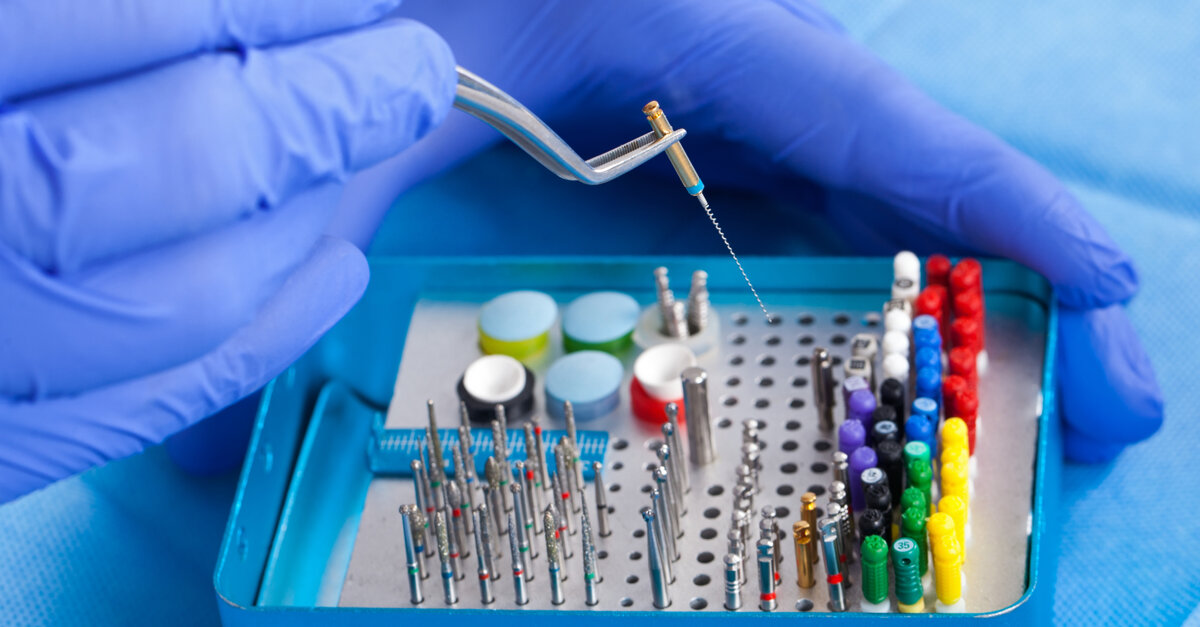
A scoping review published in the Australian Dental Journal in December 2025 warns that counterfeit nickel-titanium endodontic files are increasingly available on global dental markets, creating patient safety risks. Researchers from universities in Australia, Brazil, and the United States analysed seventeen laboratory studies comparing counterfeit and replica files with original instruments. Counterfeit files, deliberately designed and packaged to mislead, consistently demonstrated inferior mechanical performance compared to genuine products.
Laboratory findings showed that counterfeit files had significantly lower resistance to metal fatigue, altered flexural behaviour, and reduced flexibility. Surface defects including machining grooves and irregular finishes accelerated crack formation. Differences in microhardness, phase transition behaviour, and in some cases alloy composition confirmed that counterfeit files use different production protocols than originals, despite visual similarity.
Replica files deliver unpredictable results and lack clinical evidence
Replica files (designs that copy existing instruments but are legally produced in some markets) showed heterogeneous results. Some studies reported mechanical performance comparable to original products, while others documented lower torsional resistance, altered flexibility, or different phase transition behaviour. These variations stem from differences in alloy processing, heat treatment, and surface finishing, creating inconsistent mechanical properties that may affect clinical reliability.
The review identified a critical gap: no clinical studies evaluated treatment outcomes or complication rates associated with replica or counterfeit files. Researchers noted that controlled clinical evaluation of counterfeit instruments raises significant ethical concerns. Clinicians may unknowingly use files that lack rigorous scientific evaluation. The authors call for stricter regulatory oversight of counterfeit dental devices, broader evaluation of replica systems, and clinicians to source instruments through controlled supply chains while avoiding unusually cheap products or packaging inconsistencies.
International regulatory frameworks remain inconsistent
Quality control requirements for NiTi rotary and reciprocating systems differ across jurisdictions, meaning clinicians and purchasers may bear responsibility for identifying potentially unreliable products. The review emphasises the absence of international standardised quality control frameworks. In the Netherlands, dental instruments must comply with the Medical Device Regulation and infection prevention guidelines, yet counterfeit and replica products are still marketed through online platforms including eBay, Alibaba, and Amazon.
Frequently asked questions
What are the main safety risks of counterfeit endodontic files?
Counterfeit NiTi files show significantly lower metal fatigue resistance, altered flexibility, and surface defects including machining grooves that accelerate crack formation. These mechanical weaknesses are caused by different production protocols and variations in alloy composition compared to genuine instruments.
How do replica endodontic files differ from counterfeits?
Replica files copy existing designs but may be legally produced and sold in some markets, whereas counterfeits are deliberately designed and packaged to mislead. Replica files show inconsistent performance across studies, with some matching original instruments and others showing reduced torsional resistance or altered flexibility.
Is there clinical evidence about outcomes with counterfeit or replica files?
No clinical studies were found evaluating treatment results or complication rates associated with counterfeit or replica endodontic files. Researchers note that ethical concerns prevent controlled clinical evaluation of counterfeit instruments, leaving clinical risks unquantified.
How can dentists identify and avoid counterfeit endodontic files?
Source instruments through controlled supply chains from reputable distributors. Be cautious of unusually cheap products, packaging inconsistencies, or suppliers without verifiable credentials. In the Netherlands, verify that products comply with the Medical Device Regulation.
What international regulations govern the quality of endodontic files?
Quality control requirements differ across jurisdictions, and no standardised international framework exists for NiTi rotary or reciprocating systems. This inconsistency places responsibility on clinicians and purchasers to identify potentially unreliable products.