Study shows whitening toothpaste does not damage CAD/CAM materials
Whitening toothpaste choice does not affect CAD/CAM material degradation; material selection matters more for long-term aesthetics.
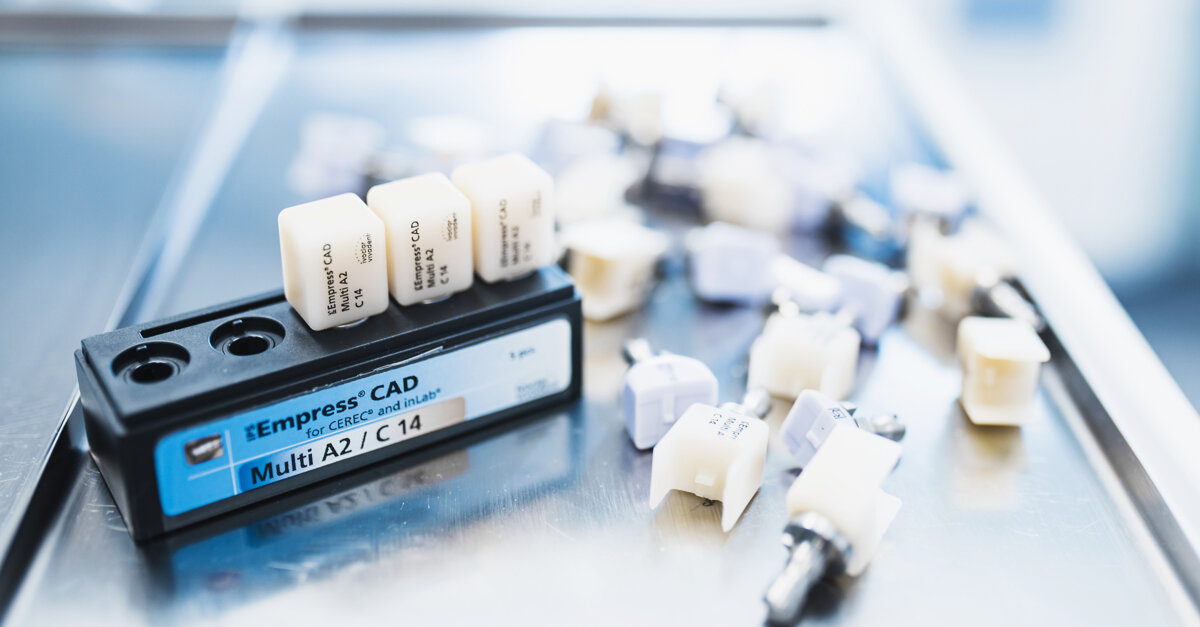
A laboratory study from Hacettepe University in Ankara investigated how whitening and non-whitening toothpastes affect the colour stability and surface roughness of CAD/CAM restorative materials under simulated oral conditions. Researchers used thermocycling in a coffee solution followed by simulated toothbrushing to replicate long-term clinical exposure and mechanical wear.
Toothpaste type has minimal impact
The findings show that whitening toothpastes do not significantly influence colour stability or surface roughness compared to conventional formulations. This suggests that whitening products may not cause greater surface degradation than standard toothpastes. However, the response to staining and ageing varied markedly depending on the material tested.
Glass-ceramics outperform resin composites
The study evaluated two glass-ceramics, IPS e.max CAD and CEREC Tessera, and two resin-containing materials, SHOFU Block HC and VITA ENAMIC. Glass-ceramic materials demonstrated superior colour stability after coffee exposure and brushing, while SHOFU Block HC showed the greatest colour changes. Surface roughness increased more significantly in the resin-containing materials, particularly VITA ENAMIC, which exhibited micro-pits and irregular wear patterns. The glass-ceramics largely maintained their surface integrity. Although these differences were unlikely to be clinically relevant for plaque accumulation, the authors noted that resin-containing materials may require more frequent maintenance or repolishing to preserve appearance over time.
The study was published online on 23 March 2026 in Clinical Oral Investigations.
Frequently asked questions
Does whitening toothpaste damage CAD/CAM materials more than regular toothpaste?
No. The study found that whitening toothpastes do not significantly influence colour stability or surface roughness compared to conventional formulations, suggesting they may not cause greater surface degradation.
Which CAD/CAM materials are most resistant to staining and wear?
Glass-ceramic materials such as IPS e.max CAD and CEREC Tessera showed superior colour stability and maintained their surface integrity better than resin-containing materials like SHOFU Block HC and VITA ENAMIC when exposed to coffee and simulated brushing.
Do resin-containing CAD/CAM materials need special maintenance?
Yes. Resin-containing materials showed greater susceptibility to staining and surface roughness increases, suggesting they may require more frequent maintenance or repolishing to preserve their appearance over time.
Are surface roughness changes in CAD/CAM materials clinically significant?
The researchers noted that the surface roughness differences found in the study were unlikely to be clinically relevant in terms of plaque accumulation, though they may affect aesthetics and material longevity.