Same-day dentistry and interdisciplinary approaches complement each other, not compete
Two digital dentistry models complement each other. Understand cost barriers, communication needs, and team structure to choose your path.
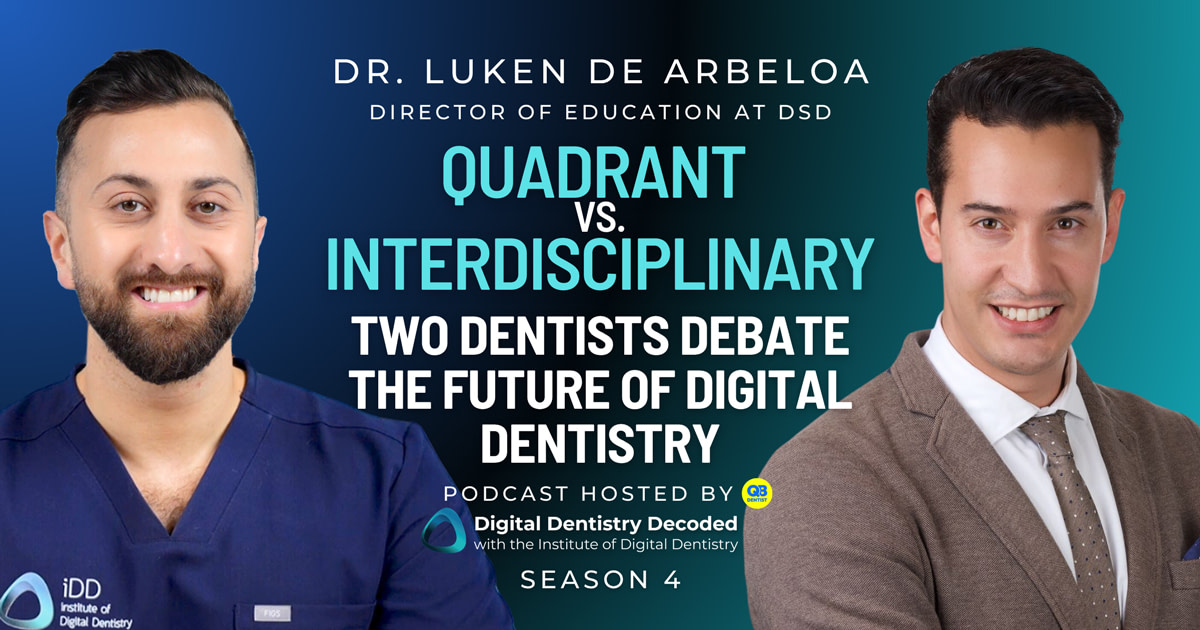
Two digital dentistry approaches that appear opposed are actually complementary, according to a podcast conversation between a New Zealand dentist practising same-day restorations and a Madrid-based prosthodontist specialising in interdisciplinary planning. Both methods use digital tools but differ in scope and timeline, yet both pursue the same goal of improved patient outcomes.
What same-day dentistry delivers
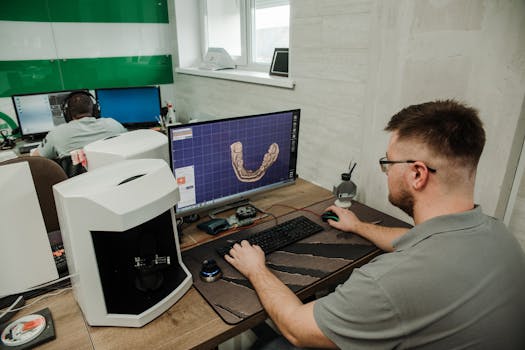
Same-day dentistry eliminates temporaries, second appointments, and the risk of lab errors. A single appointment covers preparation, scanning, design, milling, and cementation of a restoration such as an e.max crown in one to one and a half hours. Survey data cited in the article shows 66 percent of patients would switch dentists to access same-day restorations. Beyond clinical efficiency, patients experience psychological completion: the restoration is finished within the same visit, which reduces anxiety and improves satisfaction.
The intraoral scanner is now a standard clinical tool, not a luxury. It underpins everything from routine checks to implantology and full-arch cases. In a multi-chair family practice running 43 chairs across three dentist-family members, same-day crowns are the most frequent application.
The interdisciplinary framework and its demands
Interdisciplinary planning considers the whole patient rather than a single tooth. A cracked tooth may relate to an occlusal problem or airway issue; orthodontics might precede restorative work. The DSD (Digital Smile Design) workflow documents all findings and coordinates treatment across the dentist, team, specialists, and laboratory, sometimes remotely. This standardized protocol reduces dependence on a single clinician's presence for every decision. However, the approach requires years of education, a well-trained team, strong lab relationships, and tight coordination; any weak link compromises outcomes.
Communication and cost as the real barriers
Both approaches share one critical constraint: communication. Patients decline treatment not because of cost alone but because they do not understand the clinical language used to explain it. Dentists must present problems clearly enough to help patients grasp the stakes and make informed decisions. Communication training ranks among the most impactful professional development, arguably more so than technical courses.
Same-day dentistry historically required expensive equipment: milling machines at 30,000 to 40,000 USD and full CEREC setups around 120,000 USD. Three-dimensional printing has lowered this barrier significantly. Capable printers now cost 5,000 to 10,000 USD, and alternatives such as the VHF E4 milling unit fall in the 16,000 to 20,000 USD range. The mindset barrier remains: dentists must commit to the direction and prioritize resources accordingly.
AI and team structure as multipliers
AI in CAD software, such as CEREC's built-in capability, designs restorations 90 percent complete before manual refinement. Tools including 3Shape Automate, Dentbird, and Circle One narrow the gap between scanning and manufacturing. AI amplifies good preparation but cannot rescue poor prep work. Both same-day and interdisciplinary workflows depend entirely on team function. The dentist cannot execute alone; delegation, training, and clear role definition allow workflows to scale and prevent clinician burnout.
Frequently asked questions
How long does a same-day crown from prep to cement take?
Preparation, scanning, design, milling, and cementation of an e.max restoration takes approximately one to one and a half hours in practice.
What percentage of patients would switch dentists for same-day restorations?
According to an Ivoclar survey cited in the article, 66 percent of patients said they would switch dentists if they could have their restoration completed in a single visit.
What is the cost of entry for same-day CAD/CAM dentistry now?
Three-dimensional printers cost between 5,000 and 10,000 USD, and alternative milling units such as the VHF E4 range from 16,000 to 20,000 USD, down significantly from historical prices of 30,000 to 40,000 USD for milling machines and around 120,000 USD for full CEREC setups.
How much does AI design a crown before a dentist touches the software?
CEREC's AI completes approximately 90 percent of crown design automatically if the tooth preparation is adequate, reducing manual refinement time.
What is the biggest barrier to delivering high-level digital dentistry?
Communication is the primary limiting factor, not equipment or software. Patients decline treatment because they do not understand clinical explanations, not solely because of cost.