AI chairside crown design reduces manual work in single posterior case
Single-posterior crown case showing 80% AI-generated morphology acceptable at insertion; demonstrates efficiency gain over manual CAD workflows.
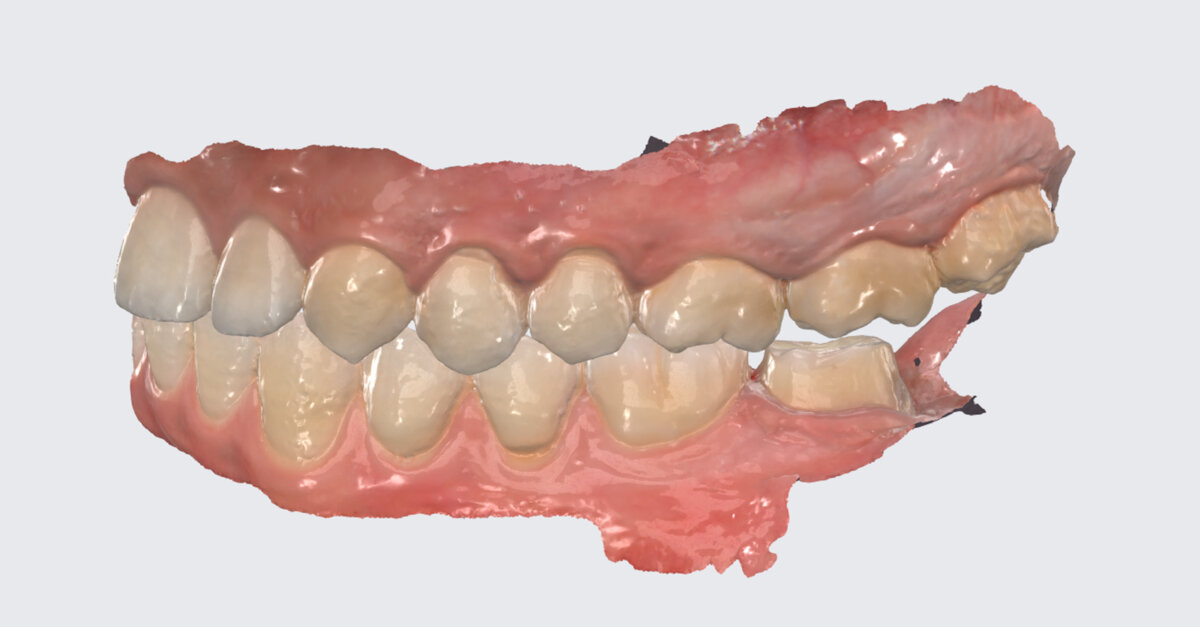
A 29-year-old male patient with a mesial carious lesion on tooth #37 required a complete crown. After tooth preparation and intra-oral scanning with a Medit i700, the scan data was uploaded to Dentbird Crown, an AI-based CAD platform integrated with Medit Link. The system automatically identified the prepared tooth, detected the margin, and generated a preliminary crown proposal with occlusal contact visualisation.
How AI-assisted design streamlined the workflow
The AI system analysed adjacent tooth alignment and occlusal relationships to generate crown morphology automatically. Approximately 80% of the morphology was retained as generated by the AI, with only 20% requiring manual refinement using digital sculpting tools. Refinements were needed in marginal definition (particularly in areas of irregular soft-tissue contour) and in proximal and occlusal contact areas. From data upload to final design approval, the entire digital design stage was completed in a short timeframe, substantially faster than conventional CAD workflows that require complete manual morphology design.
Fabrication and clinical outcomes
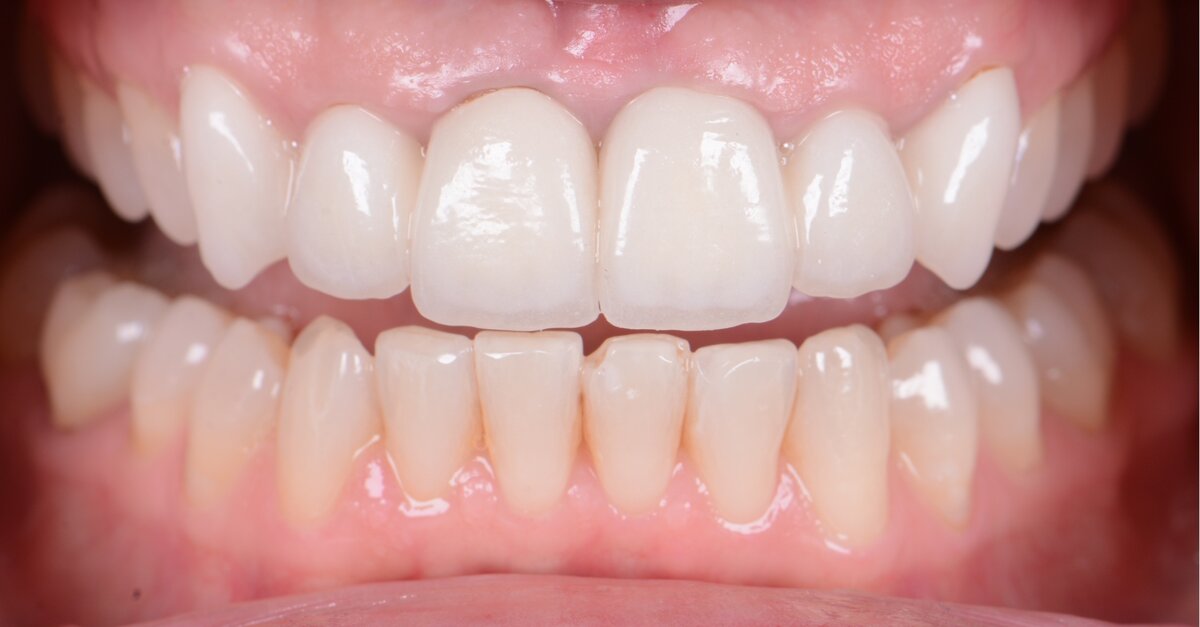
The validated design was exported as an STL file for manufacturing. A provisional crown was fabricated using a resin-based 3D printer (Sonic Mini 8K) for chairside production, while a second crown was milled from PMMA for comparison. The 3D-printed provisional crown was tried intra-orally and showed accurate margin reproduction, no overextension or gaps, clinically acceptable proximal contact, and no premature occlusal contact. At one-week follow-up, marginal integrity and soft-tissue response remained stable. The same design was then used to fabricate the definitive zirconia crown, which was placed without complication. Marginal adaptation, proximal contact, and occlusal relationships remained within physiologically acceptable limits at insertion.
Clinical limitations of AI-assisted design
The authors note that AI systems do not replace clinical judgement and should be regarded as supportive tools. In routine cases such as single posterior crowns, AI-assisted design offers advantages in efficiency and consistency. However, in cases involving complex occlusal schemes or multiple missing teeth, additional manual modification may be required. Final assessment of fit, function and aesthetics remains the clinician's responsibility. Optimal outcomes are achieved when automated design capabilities are integrated with clinical expertise.
Frequently asked questions
How much of the crown morphology did the AI system generate automatically?
Approximately 80% of the morphology was retained as automatically generated by the AI system, with approximately 20% requiring manual refinement using digital sculpting tools. Refinements were mainly needed in marginal definition and proximal/occlusal contact areas.
What intra-oral scanner was used in this case?
A Medit i700 intra-oral scanner was used to capture the digital impression of the prepared tooth. The scan data was then imported via cloud interface directly into the Dentbird Crown platform through Medit Link integration.
How long did the AI-based design process take from scan upload to final approval?
The article states the entire digital design stage was completed within a relatively short time from data upload to final design approval, though no specific timeframe in minutes or hours is provided. This was substantially faster than conventional CAD workflows requiring complete manual morphology design.
What manufacturing methods were used to fabricate the crowns?
A resin-based 3D printer (Sonic Mini 8K by Phrozen) was used for the provisional crown, enabling rapid chairside production. A second crown was milled from a PMMA block using subtractive manufacturing for material homogeneity comparison.
Did the AI-designed crown require adjustment before placement?
No adjustment was required. The 3D-printed provisional crown showed accurate margin reproduction with no overextension or gaps, clinically acceptable proximal contact, and no premature occlusal contact when tried intra-orally.