Literature Review: VR-Haptics as Complementary Tool in Dental Education
Review of 42 studies clarifies where VR-haptic simulation currently fits in dental training and what validation gaps remain before broader adoption.
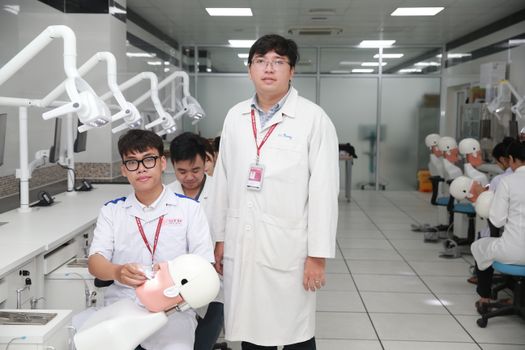
A literature review published in the Journal of Dental Education examined the benefits and challenges of integrating haptics-enhanced virtual reality training in dental curricula. The review was led by the Institute of Dentistry at the University of Eastern Finland and involved an international team of researchers.
Researchers searched PubMed for studies published between January 2010 and January 2024, using terms including dentistry, education, haptic, teaching, training, and virtual reality. Of 667 initial matches, 42 articles were selected for in-depth analysis. Results from a global educator survey on VR-haptics use in dental education were also included.
The review found that VR-haptic simulation has demonstrated value as a complementary tool in dental simulation practice. Students were able to transfer hand skills learned in VR environments to real-world clinical scenarios. The researchers identified validation as a key factor for wider acceptance of VR-haptic simulators, noting that further research is needed before VR-haptics can be considered a primary method for developing hand skills. The review also raises the possibility that VR-haptic simulation could eventually be used as an assessment tool in student and clinician credentialing. For educators, the technology expands options for structuring both preclinical and clinical training, including individualised feedback and skill development.