3D printing delivers clinical value in removable dentures, review shows
3D printing in removable dentures now shows comparable clinical outcomes to conventional methods; review highlights current applications and material limitations.
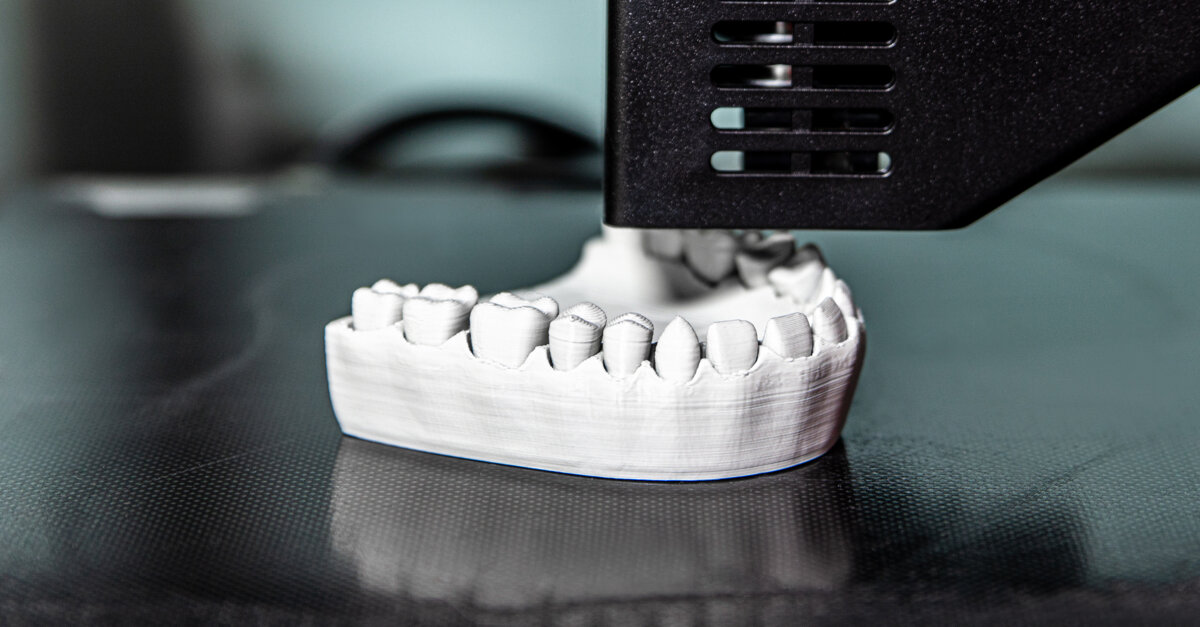
A review published in January 2026 in the Journal of Esthetic and Restorative Dentistry concludes that 3D printing is feasible for removable dentures, frameworks and occlusal devices, with current applications already showing clinical benefit in removable prosthodontics.
Current clinical applications and outcomes
3D-printed complete dentures now achieve fit and patient satisfaction comparable to conventional or milled alternatives, often requiring fewer appointments. The technology also enables high reproducibility through digital archiving, supporting fabrication of copy dentures. For removable partial denture frameworks and implant overdentures, metal 3D-printing technologies such as selective laser melting produce cobalt-chromium or titanium alloy frameworks with favourable fit and promising mechanical performance, reducing laboratory effort compared with conventional casting. 3D printing of occlusal splints is already widely used, offering high accuracy, straightforward reproducibility and quick replacement, particularly valuable for patients with bruxism or temporomandibular disorder.
Multi-material and multilayer 3D printing is expanding prosthetic possibilities. In complete dentures, printing denture bases and teeth in a single build reduces bonding and assembly steps while improving efficiency and structural integrity.
Limitations and future developments
Material performance and standardisation remain challenges. Printed denture base resins sometimes exhibit inferior mechanical properties compared with milled polymethyl methacrylate, including reduced flexural strength, hardness and bond strength. Long-term clinical data on durability, wear, discoloration and microbial colonisation are lacking, and variability in printing parameters and post-processing contributes to heterogeneous outcomes.
Researchers anticipate progress in three areas. Multi-material and hybrid manufacturing will produce more robust monolithic dentures and hybrid polymer-metal structures. Artificial intelligence-driven design will increase automation in data segmentation, tooth arrangement and quality control, with CAD platforms combining intra-oral scans with facial and radiographic records. Material advances will include reinforced, antimicrobial and resilient resins, plus emerging applications such as sensor integration for bruxism monitoring and stimuli-responsive dentures that adapt to ridge resorption.
Frequently asked questions
What removable prosthetic applications can 3D printing produce?
3D printing is used for complete dentures, removable partial denture frameworks, implant overdentures, and occlusal splints. Metal printing technologies produce cobalt-chromium or titanium frameworks, while multi-material approaches enable denture bases and teeth to be printed in a single build.
How do 3D-printed dentures compare to conventional dentures?
3D-printed complete dentures achieve fit and patient satisfaction comparable to conventional or milled options while often requiring fewer appointments. They enable high reproducibility through digital archiving and support fabrication of copy dentures.
What material limitations do 3D-printed dentures have?
Printed denture base resins exhibit inferior mechanical properties compared with milled polymethyl methacrylate, including reduced flexural strength, hardness and bond strength. Long-term clinical data on durability, wear and discoloration are lacking, and variability in printing parameters affects outcome consistency.
What future developments are expected in 3D-printed removable prosthetics?
Anticipated advances include multi-material hybrid structures, artificial intelligence-driven design automation, and reinforced antimicrobial resins. Emerging applications include sensor integration for bruxism monitoring and stimuli-responsive dentures that adapt to ridge resorption.
Is 3D printing already used for occlusal splints in clinical practice?
Yes. 3D printing of occlusal splints is already widely used clinically, offering high accuracy, straightforward reproducibility and quick replacement, particularly valuable for patients with bruxism or temporomandibular disorder.