Ivoren Kruis congress examines nutrition's role in oral health
Dental professionals need evidence on nutrition's role in caries prevention and behavior-change methods to counsel patients effectively.
Oral health depends on diet, not just brushing
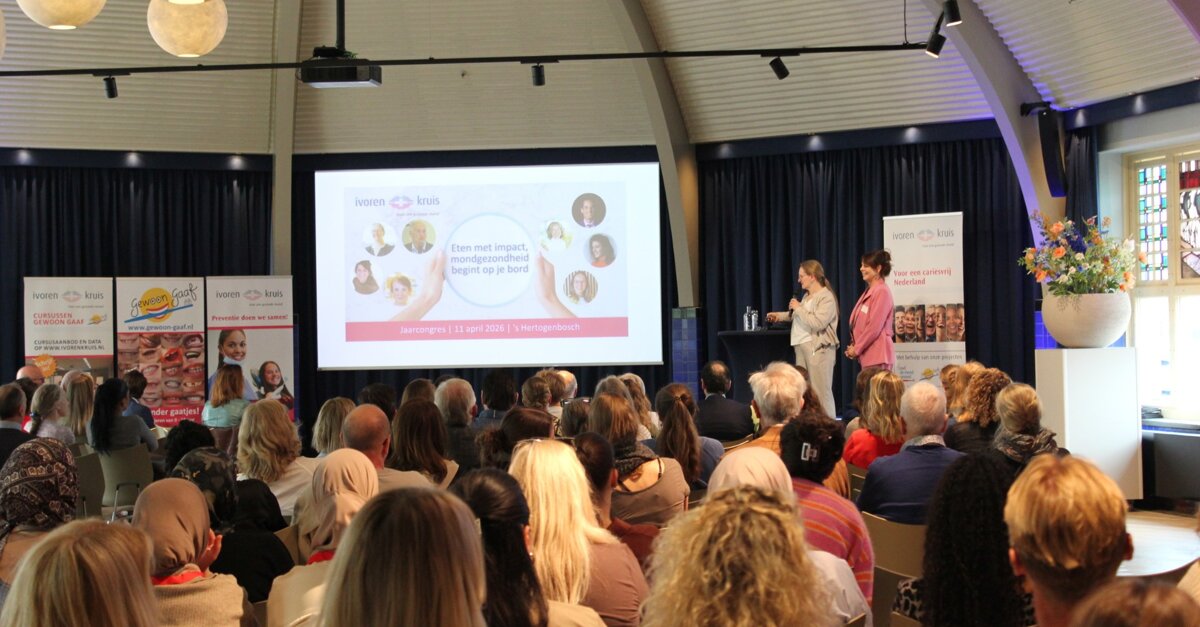
The Ivoren Kruis annual congress brought together six speakers to explore the relationship between nutrition and oral health. The event, chaired by Monique van der Veen, moved beyond the conventional message about sugar and brushing to examine how diet, immunity, microbiome, and behavior interact to shape oral health outcomes.
How different foods affect tooth biofilm and inflammation
Egija Zaura demonstrated that the oral cavity functions as a microbial ecosystem. In a 48-hour experiment without oral hygiene, teeth developed minimal biofilm when no sugar was consumed, but a thick plaque layer formed after 48 hours of high-sugar consumption. Marthe Walvoort explained that different types of sugar affect the body differently. Eating an apple with fiber produces a smaller blood sugar spike and dip than drinking apple juice alone, which explains why sugary snacks create hunger cycles. Walvoort also launched the Slim Smullen program, which teaches primary school children to bake without added sugar, using applesauce for sweetness and fiber to structure the baked goods.
Behavior change and systemic factors shaping diet
Jacqui van Kemenade, a physician, explained that obesity and metabolic disease involve more than lifestyle choices. Rapid weight loss can impair metabolism, and sedentary behavior signals the body to conserve energy. In type 2 diabetes, insulin resistance causes glucose to be stored as abdominal fat, which disrupts immune function and oral health. Luc Hagenaars highlighted the commercial determinants of health: large food corporations frame nutrition problems as individual failings rather than systemic issues, and ultraprocessed foods, stripped of fiber and engineered for habit formation, now dominate markets. Dental professionals working together with other health providers and scientists can build a counterforce to these commercial interests.
Denise Leusink and Lotte van der Schoot tested a conversation methodology called Uitblinkers, originally designed for tooth-brushing behavior change with children and parents. They found that parents value family meals and struggle with food conflict, and that dental professionals must work within their own role while building trust and equality with families. Their prototype conversation cards guide families to address one challenge and one action at a time, with iterative testing and adjustment.
Frequently asked questions
How does diet composition affect tooth biofilm formation?
High-sugar diets promote rapid bacterial growth on teeth, forming thick plaque in 48 hours, while diets without added sugar produce minimal biofilm. Fiber slows blood sugar spikes, reducing the energy available for harmful bacteria.
Why do parents struggle with feeding advice in the dental practice?
Parents prioritize family meals as comfort and togetherness, not nutrition education. They need practical, one-step actions and equal partnership with dental professionals, not unsolicited dietary advice delivered as if from a dietitian.
What role does the microbiome play in oral health?
The oral cavity is a microbial ecosystem where balance determines health. Sugar consumption and stress disrupt this balance, promoting harmful bacteria. A healthy microbiome is established early in childhood.
How can dental professionals influence food industry impact on oral health?
By forming alliances with other health professionals, scientists, and community advocates, dental professionals can counter the commercial messaging that frames poor nutrition as individual choice rather than a systemic industry issue.