T-Scan for occlusal analysis: research shows mixed results
Mixed research findings on T-Scan accuracy: articulation paper remains essential for occlusal diagnosis.

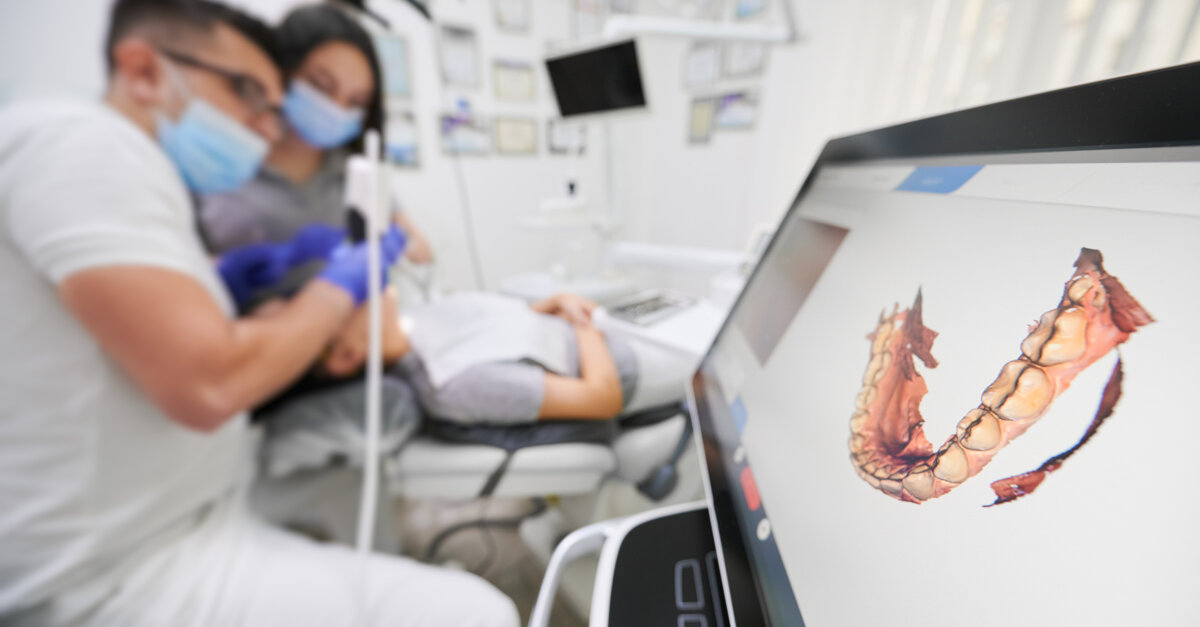
The T-Scan is a digital diagnostic tool designed to record occlusal contacts and measure occlusal loading force and timing during jaw closure. Unlike traditional articulation paper, which identifies contact points visually, the T-Scan aims to objectify diagnosis by quantifying force intensity and the sequence of contact timing.
What the research shows
Studies on T-Scan accuracy and reproducibility have produced conflicting findings. Some research reports high reproducibility for recording relative loading force and timing, while other studies conclude that the T-Scan is less effective than articulation paper at locating occlusal contacts. No consensus has emerged on whether the tool delivers the diagnostic advantages its designers claim.
Clinical practice implications
Because evidence remains divided, articulation paper continues to be an essential diagnostic tool in occlusion and articulation assessment. Clinicians should not view the T-Scan as a replacement for traditional methods. Clinician interpretation remains central to diagnosis, and the T-Scan functions as a supplementary tool rather than a definitive diagnostic instrument. More rigorous research is needed to clarify the T-Scan's role in routine practice.
Frequently asked questions
What does the T-Scan measure in occlusal diagnosis?
The T-Scan records occlusal contact points, measures intensity of occlusal loading force, and tracks the timing of occlusal loading forces during lower jaw closure. This differs from articulation paper, which only identifies contact location visually.
Is the T-Scan more accurate than articulation paper?
Research shows conflicting results. Some studies report high reproducibility for force and timing measurement, while others indicate the T-Scan is inferior to articulation paper at locating occlusal contacts. No clear consensus exists on its superiority.
Should T-Scan replace articulation paper in clinical practice?
No. Articulation paper remains an essential diagnostic tool. The T-Scan should be used as a supplementary method, not as a replacement for traditional occlusal analysis techniques.
Why do T-Scan studies produce different conclusions?
Research on the T-Scan has yielded mixed results on accuracy and reproducibility. Further rigorous research is needed to clarify the tool's effectiveness and establish clearer clinical guidelines for its use.