Webinar: whitening protocol for dentally unfit patients
Practical framework for managing whitening in high-risk patients, with structured protocols for assessment, preparation, and restoration matching.
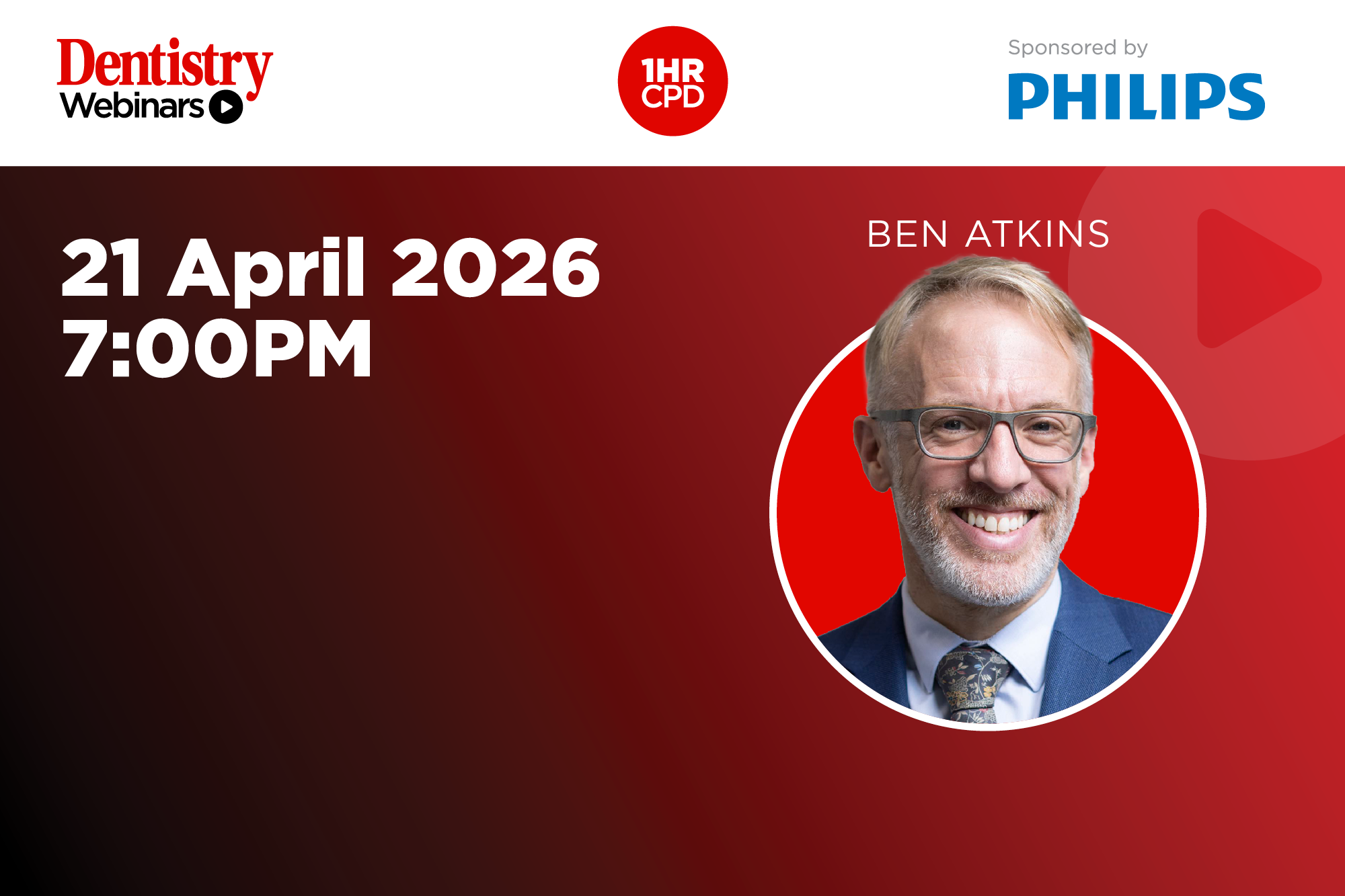
A webinar led by Dr Ben Atkins, president of the Oral Health Foundation, will teach dentists how to safely manage tooth whitening in patients with poor oral hygiene, active disease, or unrealistic expectations. The session provides a structured clinical pathway from initial assessment through whitening delivery and restorative colour matching.
Assessment and preparation for whitening
The webinar covers a step-by-step clinical framework that starts with a structured assessment checklist, including risk factors, shade recording, consent documentation, and baseline photography. Dentists will learn to differentiate between manual and electric toothbrushing efficacy and provide tailored oral hygiene instruction to improve plaque control before cosmetic treatment. The session emphasises soft tissue considerations and sensitivity risk assessment as part of an evidence-based optimisation plan that prepares the mouth for safe whitening and ensures patient compliance.
Whitening delivery and restoration matching
Participants will learn a repeatable whitening protocol covering patient selection, material choices, contraindications, sensitivity management, and follow-up processes. The webinar addresses how to manage patient expectations by discussing achievable shade changes, treatment timelines, sensitivity, and limitations based on existing restorations. A key focus is the workflow for replacing and shade matching anterior composite restorations post-whitening to achieve natural-looking outcomes.
Clinical challenges and communication strategies
The session teaches practical communication techniques for expectation setting and consent, alongside strategies for motivating patients to improve oral hygiene before pursuing aesthetics. Dentists will learn to describe the clinical risks associated with whitening in patients with poor oral hygiene or unrealistic expectations, and how to conduct structured examinations including extraoral and intraoral assessment.
Frequently asked questions
How should dentists assess patients requesting tooth whitening?
Use a structured assessment checklist covering risk factors, shade recording, consent documentation, and baseline photography. The assessment includes extraoral and intraoral examination, history taking, and risk evaluation to identify patients with poor oral hygiene, active disease, or unrealistic expectations before proceeding.
What oral hygiene instruction should be given before whitening?
Tailor oral hygiene instruction to each patient by assessing the efficacy of their current manual or electric toothbrushing method. The goal is to improve plaque control prior to whitening as part of an evidence-based optimisation plan that prepares the mouth for safe treatment.
What are the key steps in the whitening protocol?
The protocol includes patient selection, material choice, contraindications review, sensitivity management, and follow-up processes. Dentists must manage patient expectations by discussing achievable shade changes, treatment timelines, sensitivity risks, and limitations based on existing restorations.
How do you match composite restorations after whitening?
Replace anterior composite restorations following whitening using a straightforward workflow that ensures accurate shade matching and natural-looking aesthetic results. This final restorative refinement is essential for achieving harmonious cosmetic outcomes.
Who is Dr Ben Atkins and what is his background?
Dr Ben Atkins is president of the Oral Health Foundation and a general dental practitioner. He is a former tutor at Manchester Dental Hospital with a specialist interest in restorative dentistry, and has experience leading dental practices in north west England that serve hard-to-reach patient groups under NHS contracts.